


What Is Macor and Why Is It Suitable for Precision Machining?
Key Advantages of Macor Material
| Property | Typical Value | Engineering Benefit |
| Max Continuous Temp | ~800°C | High-temperature stability |
| Dielectric Strength | ~40 kV/mm | Excellent insulation |
| Thermal Conductivity | Low | Thermal isolation |
| Density | 2.52 g/cm³ | Lightweight |
| Machinability | Excellent | CNC compatibility |
How Does Macor Ceramic Machining Work?
Common Machining Operations
-
CNC milling
-
Precision turning
-
Drilling and micro-drilling
-
Thread tapping
-
Slotting and contouring
-
Surface finishing
Recommended Cutting Guidelines
| Parameter | Typical Range |
| Cutting Speed | 30–60 m/min |
| Feed Rate | Moderate, avoid aggressive feed |
| Tooling | Sharp carbide tools |
| Coolant | Dry machining preferred |
Design Guidelines for Custom Macor Ceramic Parts
-
Minimum wall thickness >1.5 mm
-
Avoid sharp internal corners
-
Use generous radii where possible
-
Maintain uniform wall sections
-
Consider thermal expansion compatibility
Macor vs Alumina: Which Ceramic Is Better for Your Project?
| Feature | Macor | Alumina |
| Machining Difficulty | Easy | Very Difficult |
| Diamond Grinding Required | Minimal | Required |
| Complex Geometry | Excellent | Limited |
| Strength | Moderate | High |
| Prototype Suitability | Excellent | Poor |
Applications of Macor Ceramic Machining
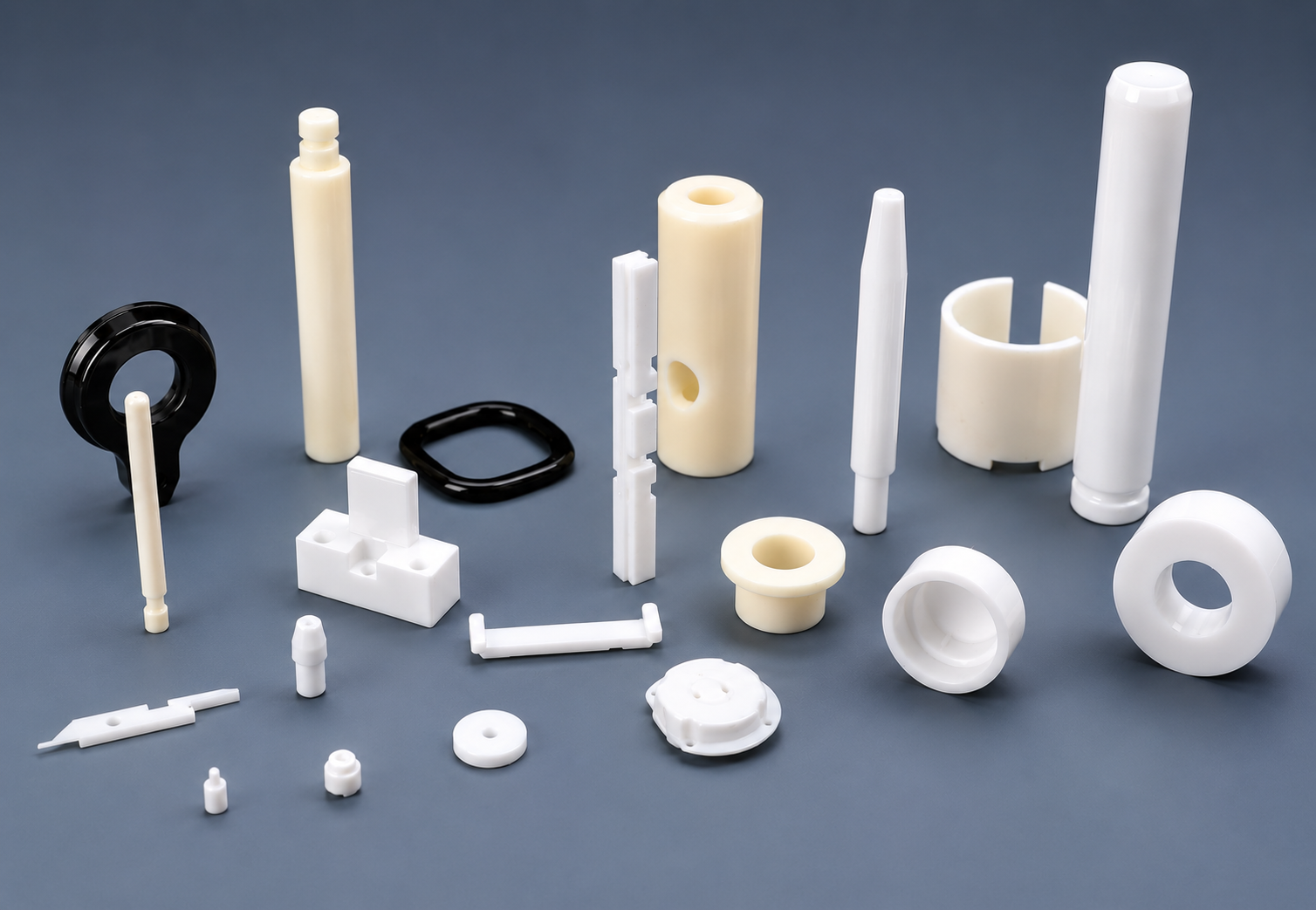
Macor ceramic machining plays a vital role in several high-tech industries thanks to its unique combination of machinability, thermal stability, and electrical insulation properties.
In the semiconductor industry, Macor is widely used to produce wafer handling components, insulating supports, and vacuum chamber fixtures. Its ability to maintain dimensional stability at high temperatures and its extremely low outgassing rate make it ideal for cleanroom and vacuum applications where contamination must be minimized.
Within aerospace systems, Macor is selected for thermal isolation parts, sensor housings, and electrical insulators. The material’s capability to operate in harsh thermal environments and resist radiation helps ensure reliability in spacecraft and satellite equipment where performance and safety are critical.
For medical and laboratory devices, Macor’s versatility enables the fabrication of precision structural supports, high-temperature insulating parts, and optical mounts. Its biocompatibility and chemical inertness make it suitable for environments that demand both cleanliness and stability under temperature cycling.
In high-voltage electrical systems, engineers use Macor to create arc barriers, insulating bushings, and terminal isolation components. The material provides excellent dielectric strength, preventing electrical breakdown even under strong voltage conditions.
Additionally, Macor’s low outgassing properties make it highly suitable for use in vacuum environments such as research chambers and analytical instrumentation, where maintaining a stable and contaminant-free atmosphere is essential.

Cost of Macor Ceramic Machining
Main Cost Drivers
-
Raw Macor material price
-
Machining complexity
-
Tolerance requirements
-
Inspection time
-
Quantity (prototype vs production)
Relative Cost Breakdown
| Cost Element | Impact Level |
| Material | High |
| CNC Machining Time | Medium–High |
| Tool Wear | Medium |
| Quality Inspection | Medium |
| Packaging | Medium |
Quality Control in Macor Ceramic Machining
-
CMM dimensional inspection
-
Flatness and perpendicularity verification
-
Surface roughness measurement
-
Visual micro-crack detection
-
Electrical insulation validation (if required)
How to Choose the Right Macor Ceramic Machining Supplier
Technical Expertise
-
Proven experience with machinable ceramics
-
Ability to achieve ±0.02 mm tolerance
-
Advanced CNC equipment
Engineering Support
-
DFM feedback before production
-
Material compatibility consultation
-
Optimization of part geometry
Quality System
-
ISO-certified processes
-
Inspection reports provided
-
Stable documentation control
Production Capacity
-
Prototype capability
-
Low-to-medium volume production
-
Short lead time
Why Many Engineers Choose XY-GLOBAL
Proven Machining Capability for Macor Ceramic Parts
Machining Capacity
| Capability | Specification |
| General tolerance | ±0.02 mm |
| Critical feature tolerance | ±0.01 mm (geometry dependent) |
| Surface roughness | Ra 0.8–1.6 μm |
| Maximum part size | 600 mm |
| Minimum wall thickness achieved | 1.5–2.0 mm |
| Thread capability | Metric / UNC / custom |
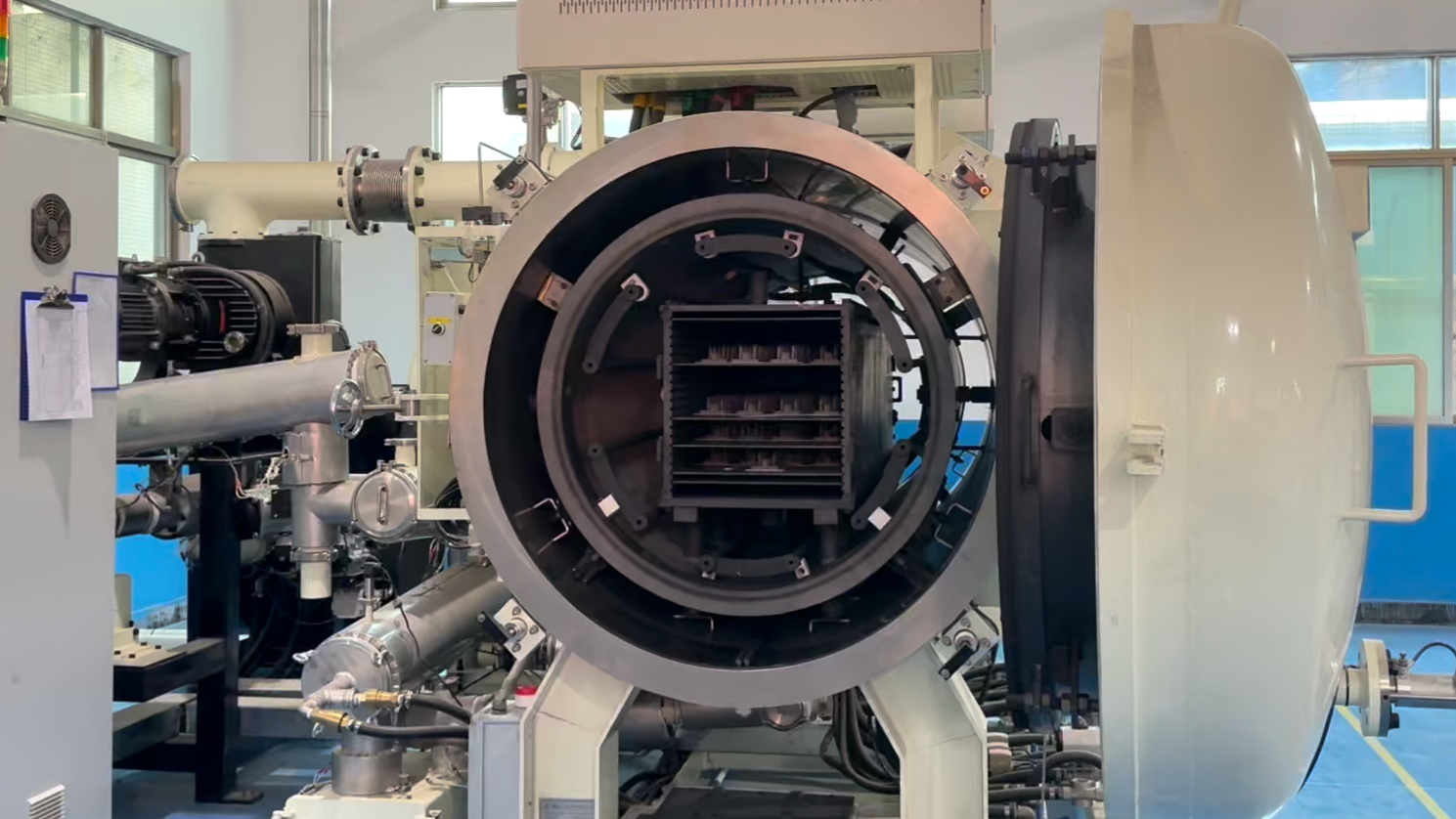
Equipment and Inspection Resources
-
High-speed 3-axis and 5-axis CNC machining centers
-
Precision CNC lathes
-
Micro-drilling capability
-
Dedicated ceramic-compatible tooling
-
CMM dimensional inspection systems
-
Surface roughness testers
-
Flatness and parallelism measurement equipment
Real Project Example: Semiconductor Insulation Component
Engineering Challenges
-
Preventing micro-edge chipping
-
Maintaining flatness under 0.03 mm
-
Ensuring thread integrity
XY-GLOBAL Solution
-
Multi-step roughing and finishing tool path
-
Controlled feed rates to minimize stress
-
Optimized clamping to avoid distortion
-
100% CMM inspection
Why XY-GLOBAL Has an Advantage in Machinable Ceramic Projects
Machining Macor is challenging—only a few suppliers can achieve consistent quality across batches. XY-GLOBAL stands out with its deep expertise in brittle material machining, precision fixture design, and controlled feed strategies. Its cross-industry experience in optical, semiconductor, and medical sectors ensures stable tolerance control and reliable production results.
Engineering Support and DFM Optimization
To prevent design-stage failures, XY-GLOBAL provides early DFM evaluation, including wall thickness optimization, corner radius adjustments, and stress analysis. Early input helps minimize scrap and reduce total project cost.
Quality and Process Control
Each project follows a strict quality framework involving incoming material checks, documented machining parameters, and detailed inspection reports. Visual crack inspection and optional CMM verification ensure reliability for high-demand applications such as aerospace and vacuum systems.
Lead Time and Production Flexibility
-
Prototype lead time: 7–12 working days (geometry dependent)
-
Small batch production: Flexible scheduling
-
Engineering response time: 24–48 hours
Frequently Asked Questions About Macor Ceramic Machining
1. Is Macor stronger than alumina?
2. Can Macor be threaded?
3. Is Macor expensive?
Material cost is higher than aluminum but often more cost-effective than fully sintered ceramics when machining complexity is considered.
4. Is Macor vacuum compatible?
Conclusion: Is Macor Ceramic Machining Right for Your Application?
-
Complex geometry production
-
Tight tolerance capability
-
High-temperature insulation
-
Efficient prototyping
-
Reduced tooling cost
Share:
Choosing the Right Ceramic Bearing Manufacturers: What You Need to Know
How Electrical Discharge Machining (EDM) Powers High-Precision MIM Mold Manufacturing