

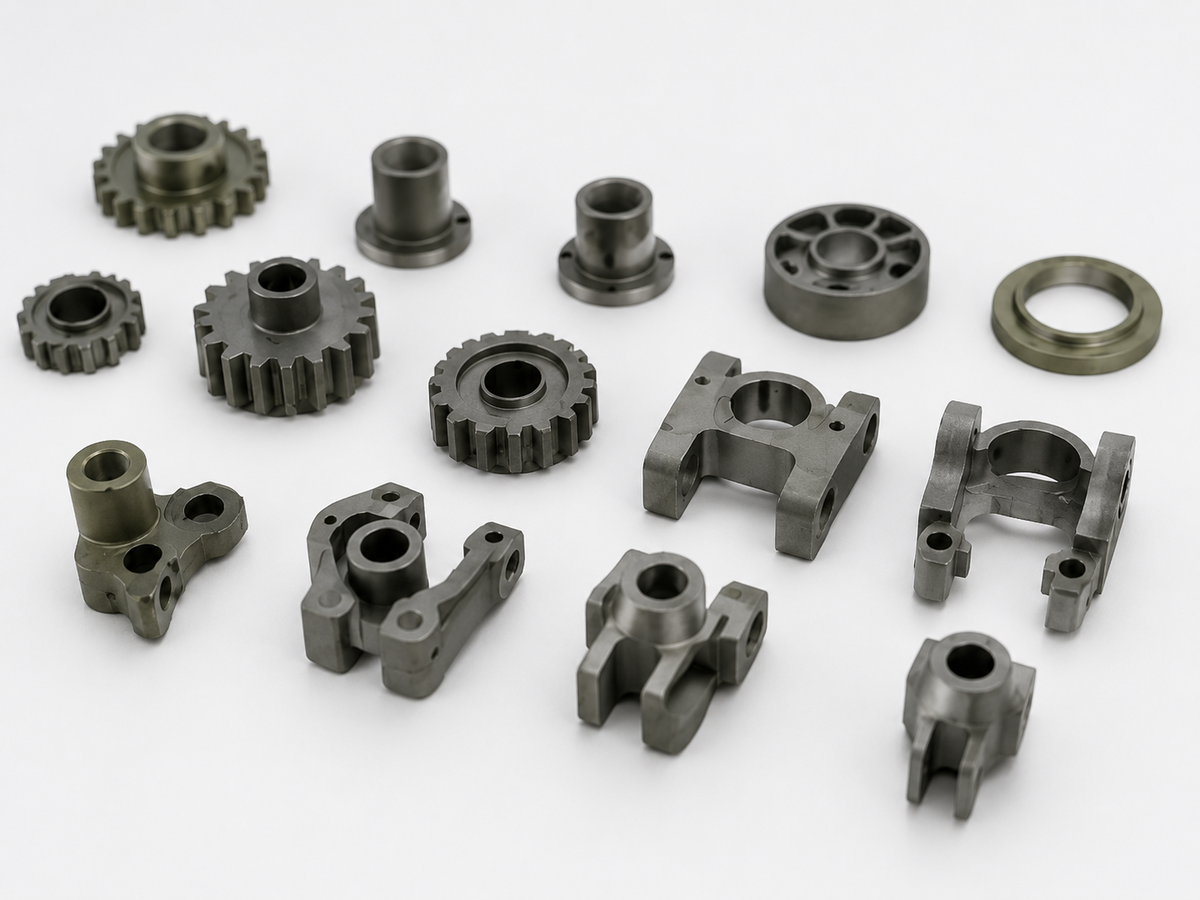
Steel is one of the most widely used material families in metal injection molding (MIM). It offers a useful combination of strength, corrosion resistance, wear performance, and cost efficiency for small, complex components. However, not all MIM steels behave the same way. A medical instrument part, a miniature locking mechanism, and a wear-resistant gear may each require a different grade.
For engineers evaluating metal injection molding steel, the main question is not simply whether steel can be molded. It is which steel grade will deliver the required properties after debinding, sintering, and any secondary processing.
This guide compares common MIM steel grades, explains the manufacturing factors that affect performance, and shows when steel MIM is a better choice than conventional machining.
What Is Steel Metal Injection Molding?
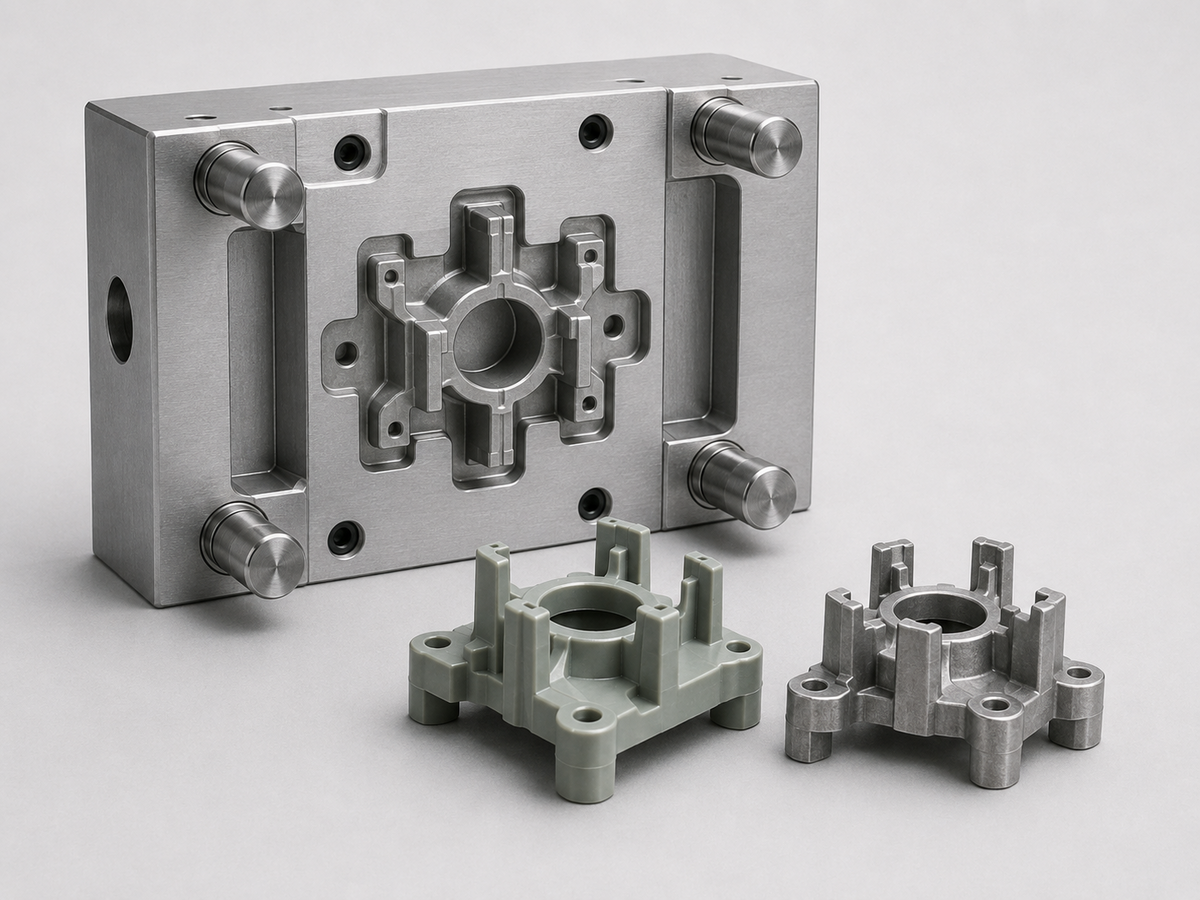
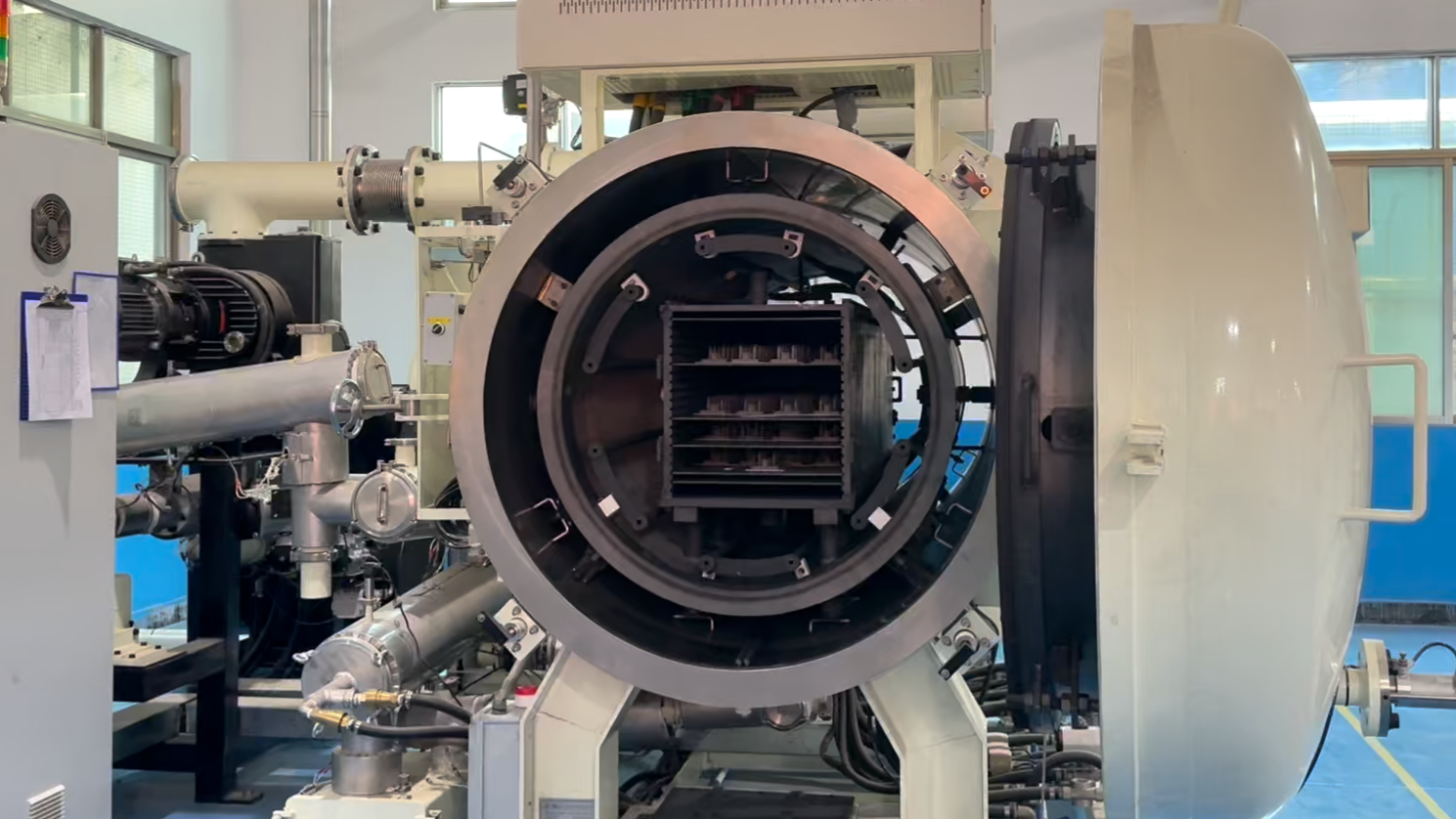
Steel metal injection molding is a manufacturing process used to produce relatively small metal parts with complex three-dimensional features. Fine steel powder is mixed with a polymer binder to create a moldable feedstock. The mixture is injected into a tool, the binder is removed, and the remaining powder is sintered at high temperature to form a dense steel component.
The resulting part is not a plastic-coated component or a casting made from molten steel. The binder serves only as a temporary processing aid and is largely removed before the final part is produced.
MIM can integrate features such as ribs, slots, small holes, bosses, and irregular profiles into one near-net-shape component. That reduces the amount of material removal needed compared with machining a complicated part from bar stock. It also means the design must account for molding, debinding, and predictable shrinkage during sintering.
Steel MIM is most attractive when the geometry is complex, the design is stable, and enough parts will be ordered to justify the tooling investment.

Common Metal Injection Molding Steel Grades
Material selection should begin with the working environment and the component's main function. Stainless steels are commonly used where corrosion resistance is important, while low-alloy steels can be useful for heat-treated mechanical parts that do not need stainless corrosion performance.
| MIM steel grade | Main advantage | Typical applications | Main consideration |
|---|---|---|---|
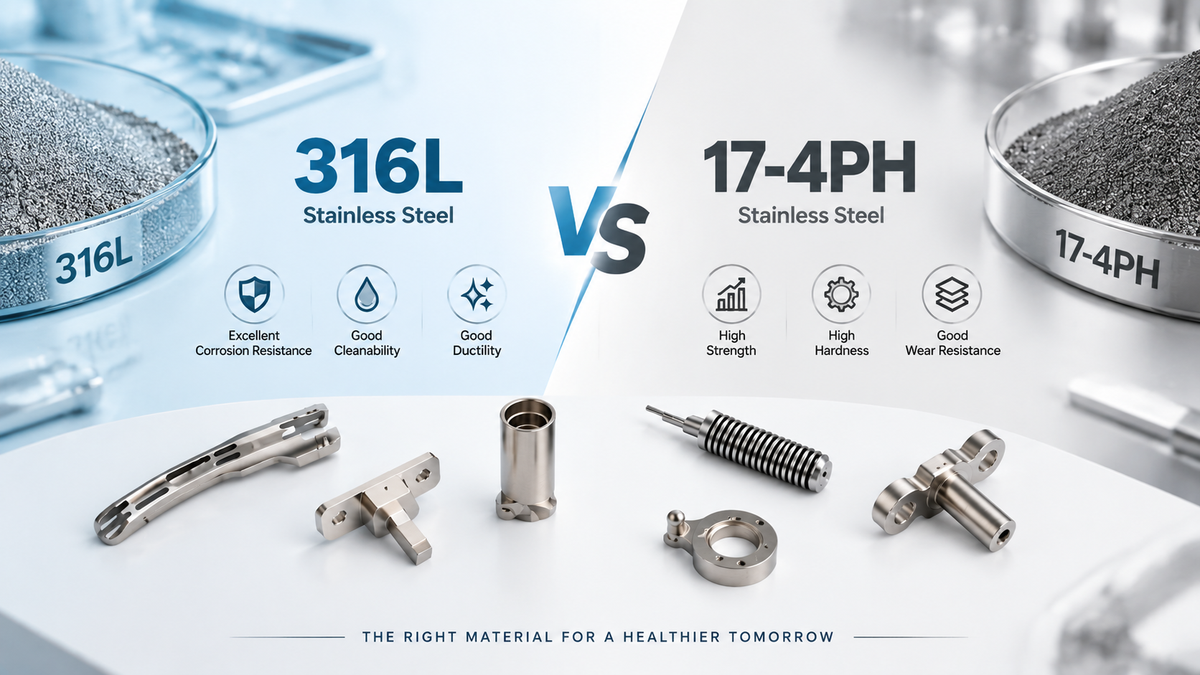
| 316L stainless steel | Corrosion resistance and ductility | Medical device hardware, fluid fittings, small housings | Lower hardness and strength than hardened grades |
| 17-4PH stainless steel | Higher strength through precipitation hardening | Levers, latches, precision structural parts | Specify the final heat-treatment condition |
| 420 stainless steel | Hardness and wear resistance after heat treatment | Tool components, wear parts, mechanical locks | Corrosion resistance is more limited than 316L |
| 440C stainless steel | High hardness and wear performance | Precision wear elements, instrument components | Toughness and dimensional change after hardening need review |
| 430L stainless steel | Magnetic behavior and general stainless performance | Magnetic or functional hardware | Less suitable for aggressive corrosion exposure |
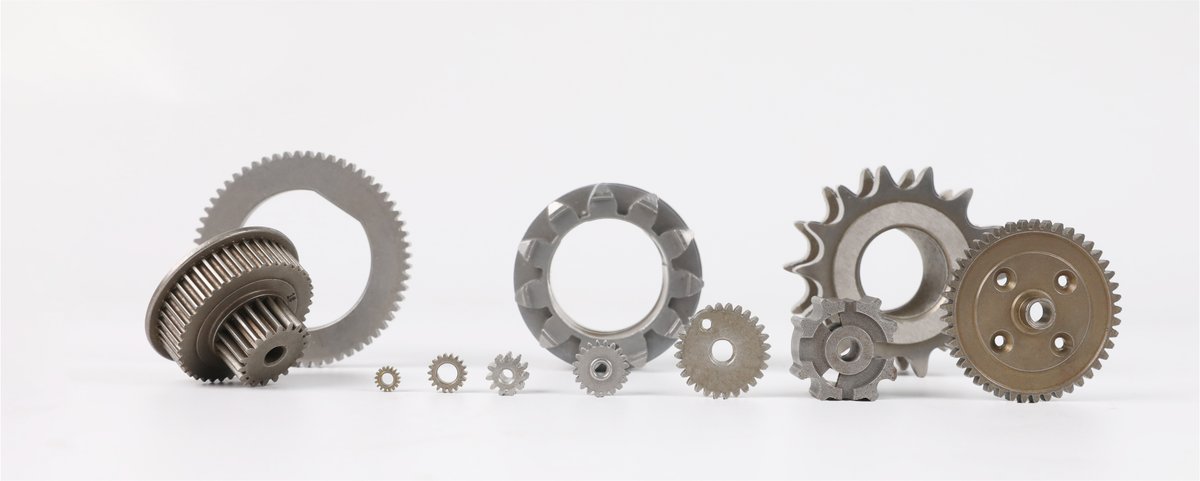
| 4605 / 4140 low-alloy steel | Heat-treatable strength and cost efficiency | Gears, cams, pawls, mechanical linkages | Usually needs corrosion protection in wet environments |
These are material-selection directions, not interchangeable specifications. Feedstock availability, achievable properties, surface requirements, and heat-treatment response must be checked with the manufacturer.
316L Stainless Steel: When Corrosion Resistance Comes First
316L is a common choice for small components exposed to moisture, cleaning agents, or environments where a clean stainless surface matters. Its low carbon content helps limit sensitization, and the alloy offers good ductility when properly processed.
Typical uses include surgical instrument mechanisms, medical equipment components, small fluid-control parts, and precision hardware. For such applications, the final surface condition may be as important as the material name. Polishing, cleaning, and passivation can be specified where appropriate.
316L is not the best choice when a part requires very high hardness or wear resistance. It is not normally strengthened through conventional quench-and-temper hardening. If the design is controlled primarily by load capacity rather than corrosion resistance, 17-4PH may be a better starting point.
17-4PH Stainless Steel: For Stronger Structural Components
17-4PH is a precipitation-hardening stainless steel used for small parts that must carry load, maintain their shape, or resist deformation. Heat treatment can increase strength and hardness, making the material useful for locking parts, levers, small brackets, and other mechanical components.
For MIM 17-4PH, simply putting “17-4PH” on the drawing is often insufficient. The heat-treatment condition, hardness or strength requirement, and inspection method should also be defined. Different aging conditions provide different property combinations.
17-4PH offers useful corrosion resistance, but it should not automatically be treated as equivalent to 316L in chloride-rich or otherwise aggressive environments. The material must be selected for the actual service conditions.
420 and 440C Stainless Steel: For Hardness and Wear
When repeated contact, sliding, or edge retention is the main requirement, martensitic stainless steels such as 420 and 440C deserve attention. These grades can be hardened through suitable heat treatment, unlike 316L.
MIM 420 can be useful for small wear-resistant mechanisms and instrument components. 440C may be considered where still higher hardness is needed, but the trade-off can include reduced toughness and more demanding processing.

Heat treatment can also change dimensions. Designers should identify bearing surfaces, critical bores, or mating faces that may need final grinding or CNC finishing after hardening. Neither grade should be selected solely because it is labeled “stainless”; corrosion performance must be checked against the application.
4605 and 4140 Low-Alloy Steel: For Functional Mechanical Parts
Low-alloy MIM steels are often considered for gears, cams, pawls, drive components, and other parts where mechanical strength and heat-treatment response matter more than stainless corrosion resistance.
Grades such as 4605 and 4140 can be processed with appropriate heat treatment to develop useful strength and hardness. In applications exposed to moisture or corrosive media, plating, coating, or another protective finish may be necessary.
Although these materials can be cost-effective, the cheapest powder is not always the cheapest finished part. Additional heat treatment, coating, distortion control, or secondary machining can change the total cost substantially.
How Steel Grade Affects MIM Part Performance
The properties of a steel MIM component depend on more than its nominal alloy chemistry. Powder characteristics, debinding control, sintering conditions, final density, and post-processing all influence the finished part.
Density and Mechanical Strength
Well-controlled MIM processes can produce steel parts at a high percentage of theoretical density. A commonly quoted production range is approximately 96–99%, although the achievable result varies with alloy, geometry, and processing conditions.
High density supports useful mechanical performance, but it does not guarantee that a MIM part has exactly the same fatigue strength, impact toughness, or surface condition as a wrought or forged part. For safety-critical or high-cycle applications, engineers should request data for the relevant MIM grade and processing condition rather than using generic wrought-steel values.
Corrosion Resistance
Corrosion behavior depends on alloy composition and on how the part is processed and finished. For example, carbon or oxygen contamination during processing, residual porosity, and surface condition may affect performance. Stainless steel grades should be compared under the actual cleaning, salt, humidity, or chemical exposure expected in service.
For regulated or corrosion-critical applications, consider whether the project needs corrosion testing, passivation verification, or specific surface-cleanliness requirements.
Heat Treatment and Surface Finishing
Steel parts may require aging, quenching and tempering, polishing, passivation, plating, or precision machining after sintering. These operations are not merely cosmetic. They can determine the final hardness, resistance to corrosion, fit with other parts, and overall performance.
This is why metal injection molding steel should be specified as a finished material condition, not just as a powder grade.
Design Guidelines for Steel MIM Parts
A good steel MIM design must work in the mold and remain stable through debinding and sintering. Many production problems come from features that look straightforward in a CAD model but are difficult to fill, support, or shrink evenly.
Account for Sintering Shrinkage
Steel MIM parts shrink substantially as they densify during sintering. A linear shrinkage range around 15–20% is often used as an early design reference, but the actual factor depends on feedstock solids loading, alloy, tool design, and process conditions.
The mold is designed larger to compensate for this shrinkage. Engineers should not manually enlarge every drawing dimension by a universal percentage; the tooling team must determine the factor for the qualified material and process.
A change from 316L to 17-4PH, for example, can require a fresh shrinkage and dimensional review even if the geometry stays the same.
Keep Wall Thickness Reasonably Consistent
Large changes in section thickness can create uneven debinding and sintering behavior, increasing the risk of distortion, cracking, or internal defects. Smooth transitions, fillets, and well-planned supporting features are usually more effective than abrupt changes between very thin and thick sections.
Wall thickness around 0.5 mm or greater can be feasible for some designs, but this is not a universal minimum. Flow length, material, local geometry, tool construction, and production volume all matter. Thick solid sections also need careful review because removing binder becomes harder as the diffusion path increases.
Design Features That Can Be Molded and Released
MIM can reduce the need to machine complicated features, but it is not free from tooling limitations. Deep undercuts, narrow internal channels, sharp internal corners, and difficult parting-line locations may require special mold mechanisms or design changes.
Draft, gate location, ejection strategy, and the placement of witness marks should be considered before the tool is made. Features that cannot be formed economically may be better added through secondary machining.
Assign Tolerances by Function
For initial planning, as-sintered dimensional tolerances in the general range of approximately ±0.3–0.5% of a dimension are sometimes used. The final tolerance depends heavily on the material, measurement direction, geometry, and process capability.
For example, a 20 mm feature at ±0.3% corresponds to ±0.06 mm. This is an illustration of the percentage, not a guarantee that a particular 20 mm feature can be produced to that tolerance.
Bearing bores, sealing faces, precision threads, and alignment datums may require CNC machining or grinding after sintering. A cost-effective drawing usually applies the tightest controls only to features that truly affect function.

Where Are Steel MIM Components Used?
Steel MIM is particularly useful for components that combine small dimensions, intricate shapes, and repeat production demand.
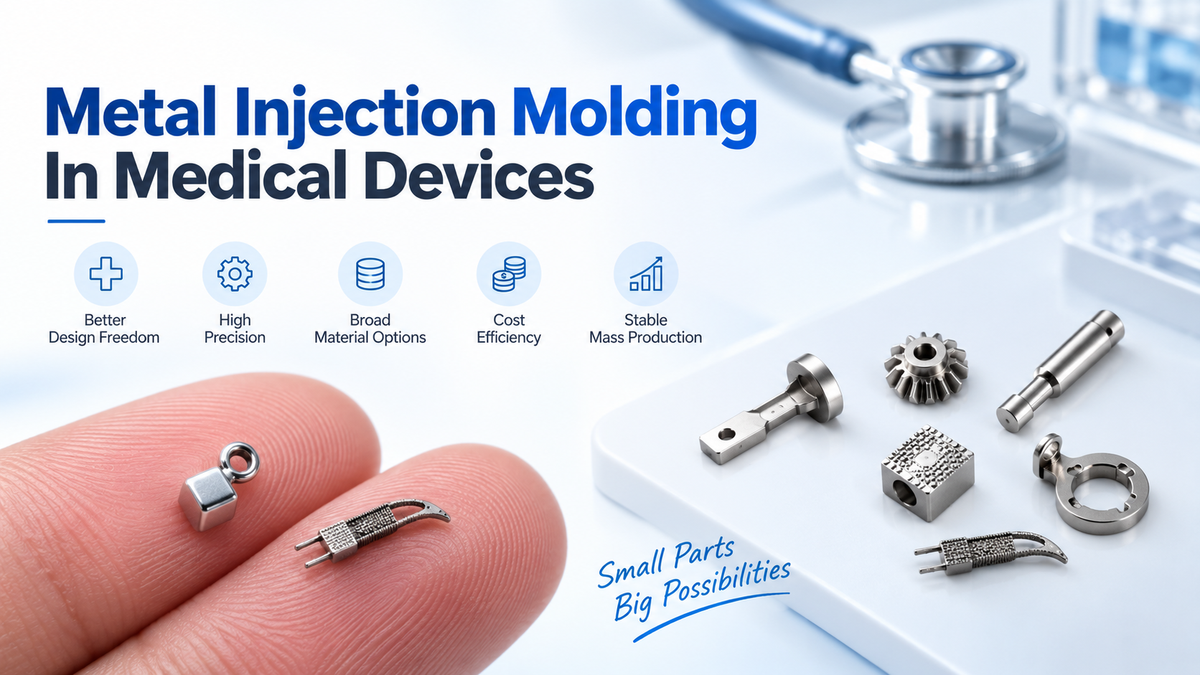
Medical and laboratory equipment. Small instrument mechanisms, connectors, and mechanical hardware can benefit from 316L corrosion resistance or the strength of 17-4PH. Material traceability, cleanliness, sterilization compatibility, and the device's regulatory requirements still need independent review. For a broader overview, see our guide to medical parts manufacturing.
Industrial automation and robotics. Miniature latches, gear-like components, locking features, and gripper linkages may be suitable when their geometry would require multiple machining setups. The required grade depends on wear, load, operating environment, and expected service life. Related applications are covered in our article on robotic grippers and end effectors.
Automotive and mechanical assemblies. Small cams, pawls, fasteners, and transmission-related hardware are possible MIM candidates when production quantity supports dedicated tooling. Heat-treated low-alloy steels may be considered for these applications, subject to strength, fatigue, and validation requirements.
Electronics and precision instruments. Steel MIM can produce brackets, connector hardware, hinge components, and compact mechanical parts with repeated features. Designers should confirm magnetic behavior, corrosion exposure, and cosmetic finishing requirements before selecting a stainless steel grade.
No single industry automatically makes MIM the correct process. Geometry, quantity, tolerances, and qualification requirements still determine the manufacturing route.
Metal Injection Molding Steel vs. CNC Machining: Which Is Better?
For small steel parts, the choice between metal injection molding and machining is usually a question of design maturity, complexity, volume, and the cost of secondary operations.
| Decision factor | Steel MIM | CNC machining |
|---|---|---|
| Best fit | Complex, repeat-production parts | Prototypes, changing designs, and low-volume work |
| Upfront investment | Dedicated tooling required | Usually no dedicated mold |
| Complex 3D features | Can consolidate many features in one molded part | May require multiple setups or special tools |
| Material utilization | Near-net-shape forming with limited material removal | Material is removed from solid stock |
| Dimensional control | Sintering shrinkage must be managed | Strong control of precision features |
| Design changes | Tool changes can be costly | Programs can be revised more easily |
| Secondary processing | Often needed for critical features | Machining is the primary shaping operation |
| Unit economics | Often improves as volume increases | Often attractive for lower quantities |
Consider a miniature 17-4PH locking component with several angled features. If the project needs 30 prototypes, machining may be the more practical option because the design is still being tested. If the same approved part will be produced in much larger quantities, MIM may reduce repeated cutting and setup operations.
There is no fixed order quantity at which MIM becomes cheaper. The break-even point depends on mold cost, steel grade, part geometry, annual demand, scrap risk, and finishing requirements. For prototype and precision finishing options, see XY-Global's CNC machining service.

What Determines the Cost of Steel Metal Injection Molding?
The powder grade is only one part of the cost. Engineers and buyers should review the complete manufacturing route rather than comparing raw-material prices alone.
Tooling and part complexity affect the initial investment. Additional slides, difficult gating, demanding cosmetics, or complicated mold-release features may make the tool more expensive.
Part size and section thickness affect material consumption, binder removal, sintering time, and distortion control. A compact part with consistent walls can be easier to process than a heavy part with thick solid sections.
Heat treatment and finishing may add cost, particularly when a hardened feature must also hold a tight dimensional tolerance. Polishing, passivation, coating, machining, and individual inspection should be included in the quotation.
Order volume affects tooling amortization. A lower unit price in production may not compensate for the initial mold cost when the lifetime quantity is small or uncertain.
For this reason, metal injection molding steel is best evaluated through total cost per accepted finished part, including tooling and quality requirements.
How to Specify Metal Injection Molding Steel for Quotation
A clear request for quotation makes material comparison more meaningful and reduces the risk of redesign after tooling begins. Before sending a project for evaluation, provide:
-
A 3D CAD file and a 2D drawing identifying critical dimensions and datums.
-
The preferred steel grade, or the required strength, hardness, wear, and corrosion performance if the grade is still open.
-
The end-use environment, operating loads, and any relevant cleaning or sterilization conditions.
-
Expected prototype quantity, annual production volume, and estimated product lifetime.
-
Required post-processing, such as aging, passivation, plating, or precision machining.
-
Inspection, testing, material certification, and traceability expectations.
For demanding parts, specify whether the material must conform to an agreed MIM material standard rather than merely to the chemistry of a similarly named wrought steel. Relevant references include ASTM B883 for metal injection molded materials and MPIF Standard 35-MIM. The latest published MPIF 35-MIM edition was released in 2025, and requirements should be confirmed against the applicable purchased standard and project specification.
An early design-for-manufacturability (DFM) review should also identify surfaces that need machining allowance and features likely to distort in sintering.
FAQ
What steel is most commonly used in metal injection molding?
316L and 17-4PH stainless steels are common choices. 316L is often selected for corrosion resistance and ductility, while 17-4PH is used where higher strength is required. Hardenable grades such as 420 and 440C and low-alloy steels such as 4605 are also used for specific mechanical applications.
Are metal injection molded steel parts as strong as machined steel parts?
MIM can produce dense steel parts with useful mechanical properties, but performance is not automatically identical to wrought or forged steel. The alloy, final density, heat treatment, part geometry, and loading conditions matter. Engineers should compare tested properties for the specified MIM condition, especially for fatigue- or safety-critical components.
What is the typical tolerance for steel metal injection molding?
An early estimate for general as-sintered dimensions is often around ±0.3–0.5%, but this range should not be treated as a universal process guarantee. Tooling strategy, part geometry, steel grade, and sintering behavior determine actual capability. Critical features may need secondary machining to achieve their specified tolerances.
Steel MIM Manufacturing Support from XY-Global
Choosing the correct steel grade is only the first step. A successful project also needs practical DFM feedback, an appropriate tooling approach, controlled post-processing, and clear inspection requirements.
At XY-Global, we support custom precision metal components through manufacturing process selection, engineering review, CNC machining, and metal injection molding project support. We can help evaluate whether a part is better suited to steel MIM, CNC machining, or a combination of both processes.
If you are developing a small steel component, contact XY-Global with your drawings, expected quantities, material requirements, and application details. Our team can review the key manufacturing considerations before the project moves into tooling or production.
Share:
Sizing Process in Powder Metallurgy: Purpose, Steps, and Tolerances