

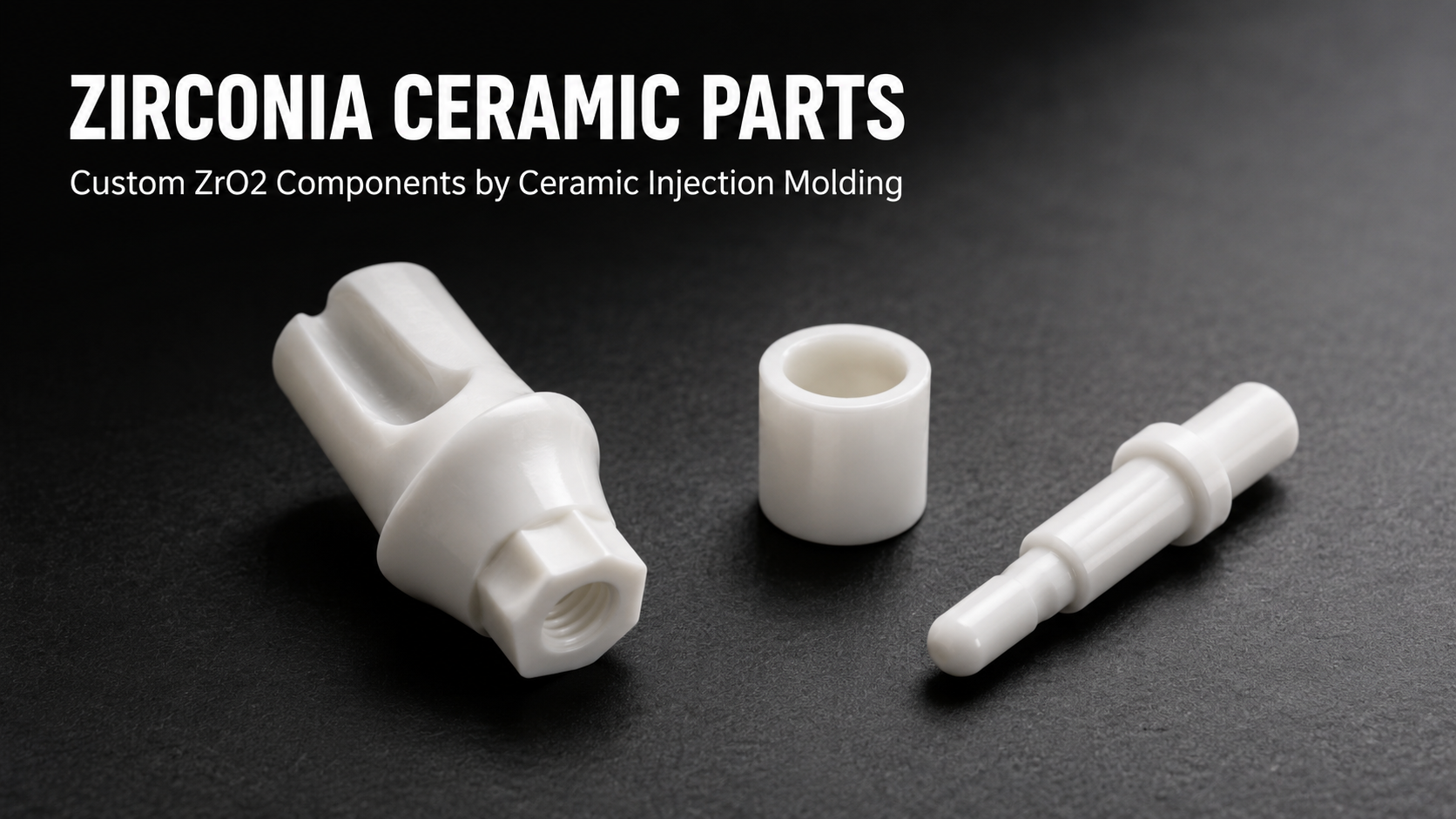
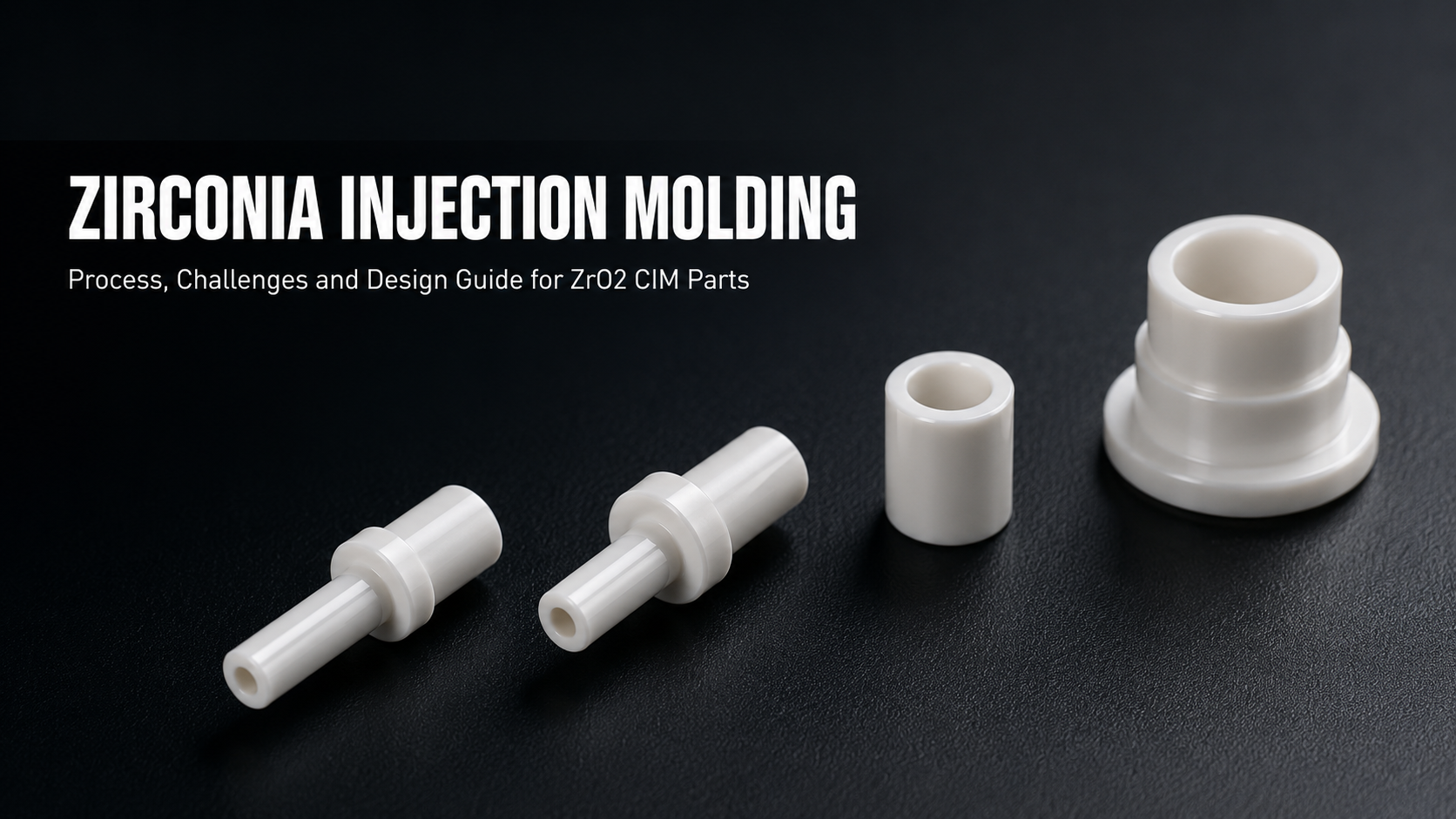
Когда приложению требуется высокая механическая прочность, отличная вязкость разрушения, биосовместимость и тонкая обработка поверхности, детали из диоксида циркония часто являются предпочтительным материалом. Диоксид циркония — химически ZrO2 — является одной из самых прочных конструкционных керамик, доступных для производства прецизионных компонентов, и производится в сложных формах с помощью керамического литья под давлением (CIM).
В отличие от оксида алюминия, который тверже, но более хрупок, диоксид циркония обладает уникальным механизмом упрочнения, который делает его значительно более устойчивым к распространению трещин. Эта комбинация прочности и вязкости сделала диоксид циркония предпочтительным керамическим материалом в компонентах медицинских имплантатов, деталях стоматологических устройств, феррулах оптоволокна, оборудовании для обработки полупроводников и промышленных изнашиваемых компонентах.
В этой статье рассматриваются свойства, которые делают диоксид циркония пригодным для прецизионных деталей, как CIM производит сложные компоненты ZrO2, типичные применения, конструктивные соображения и что предоставить для расценки.

Что делает диоксид циркония подходящим для прецизионных керамических деталей?
Диоксид циркония предлагает комбинацию свойств материала, которую трудно сопоставить с другими инженерными керамиками или металлами. Понимание этих свойств помогает инженерам решить, является ли диоксид циркония правильным выбором для их применения.
Основные свойства материала диоксида циркония
- Прочность на изгиб: 900–1200 МПа для 3Y-TZP — значительно выше, чем у оксида алюминия при 300–400 МПа
- Вязкость разрушения: 5–10 МПа·м⁰·⁵ — самая высокая среди распространенных инженерных керамик благодаря трансформационному упрочнению
- Твердость: приблизительно 1200 HV
- Теплопроводность: 2–3 Вт/м·К — низкая, что делает диоксид циркония эффективным тепловым барьером
- Тепловое расширение: приблизительно 10,5 × 10⁻⁶/К — близко к стали, что снижает тепловые напряжения в металлокерамических сборках
- Биосовместимость: соответствует ISO 13356 для применения в хирургических имплантатах
- Химическая стойкость: устойчив к большинству кислот, щелочей и органических растворителей
- Электрическая изоляция: отличные диэлектрические свойства при низких и умеренных температурах
Механизм трансформационного упрочнения — это то, что отличает диоксид циркония от других керамик. При механическом напряжении тетрагональные зерна диоксида циркония превращаются в моноклинную фазу, создавая сжимающее напряжение на концах трещин и замедляя распространение трещин. Это делает компоненты из диоксида циркония гораздо более устойчивыми к разрушению от удара или точечной нагрузки, чем оксид алюминия или другие конструкционные керамики.
Распространенные марки диоксида циркония, используемые в CIM
3Y-TZP (3 мол.% иттрийстабилизированный тетрагональный поликристалл диоксида циркония) — наиболее широко используемая марка для структурных керамических деталей из диоксида циркония. Она обеспечивает самую высокую прочность и вязкость разрушения среди марок диоксида циркония и является стандартным материалом для медицинских, стоматологических, полупроводниковых и прецизионных промышленных применений.
5Y-TZP содержит немного больше иттрия, что увеличивает прозрачность, немного снижая прочность. Он используется в основном в стоматологических реставрациях, где оптический вид имеет значение наряду с механическими характеристиками.
Для применений, требующих специфического изменения электропроводности или особых оптических свойств, могут быть доступны другие стабилизированные составы диоксида циркония. Марка материала должна быть подтверждена на основе механических, термических и нормативных требований приложения.

Как изготавливаются детали из диоксида циркония методом CIM
Керамическое литье под давлением проходит тот же четырехступенчатый процесс, что и литье металлов под давлением: приготовление сырья, литье под давлением, удаление связующего и спекание. Разница заключается в порошковом материале и условиях спекания.
Сырье для CIM из диоксида циркония готовится путем смешивания тонкого порошка ZrO2 — обычно с размером частиц менее 1 мкм для 3Y-TZP — с полимерной связующей системой. Сырье впрыскивается в прецизионные формы для создания сырых заготовок. После удаления связующего заготовки спекаются при температуре около 1350–1450°C в печи с контролируемой атмосферой, достигая плотности более 99% от теоретической и окончательных механических свойств.
Линейная усадка при спекании для CIM из диоксида циркония обычно составляет 18–22%. Это учитывается при проектировании формы, и предсказуемая и постоянная усадка является одной из причин, почему CIM производит размерно воспроизводимые детали из диоксида циркония в больших партиях.
Почему CIM предпочтительнее механической обработки для сложных деталей из диоксида циркония
Диоксид циркония чрезвычайно трудно обрабатывать в полностью спеченном состоянии из-за его высокой твердости и вязкости разрушения. Алмазная шлифовка требуется для всей механической обработки после спекания, что является медленным и дорогостоящим, особенно для сложных элементов. CIM формирует полную геометрию, близкую к конечной форме, на этапе формования, устраняя необходимость в обширной механической обработке после спекания.
Для критических размеров — диаметров отверстий, посадочных поверхностей, плоских контактных поверхностей — вторичная алмазная шлифовка после спекания может достигать допусков ±0,005 мм или более жестких. Но большая часть геометрии, включая изогнутые поверхности, отверстия, ступеньки и профили, формируется CIM со значительно меньшими затратами, чем полная механическая обработка из спеченных заготовок.
Применение деталей из диоксида циркония
Медицина и стоматология
Диоксид циркония биосовместим, химически стабилен в биологических жидкостях и имеет белый цвет, что делает его стандартным материалом для нескольких стоматологических применений. Абатменты зубных имплантатов, каркасы коронок, подконструкции мостов и основания ортодонтических брекетов обычно производятся из диоксида циркония 3Y-TZP или 5Y-TZP методом CIM для производителей стоматологических устройств среднего и крупного объема.
В области медицины диоксид циркония используется для компонентов головки бедренной кости в протезах тазобедренного сустава, контактных поверхностей хирургических инструментов и прецизионных механических деталей в устройствах, где металлические альтернативы могли бы вызывать помехи при визуализации или вызывать чувствительность у пациентов.
Волоконно-оптические соединители и электроника
Циркониевые ферулы для волоконно-оптических соединителей — включая типы соединителей SC, LC, FC и ST — являются одним из самых массовых применений циркония CIM в мире. Ферула должна обеспечивать концентричность отверстия менее 1 мкм и допуск по внешнему диаметру ±0,5 мкм после полировки. CIM производит корпус ферулы, близкий к конечной форме; отверстие и внешний диаметр обрабатываются точной цилиндрической шлифовкой и полировкой.
Цирконий выбран для ферулов, потому что его коэффициент теплового расширения точно соответствует коэффициенту теплового расширения оптического волокна, минимизируя изменение вносимых потерь при изменении температуры.
Полупроводниковое оборудование
В производстве полупроводников керамические детали из диоксида циркония используются в компонентах для обработки пластин, вставках зондовых наконечников, компонентах патронов и прецизионных позиционирующих приспособлениях. Требования включают стабильность размеров, электрическую изоляцию, химическую стойкость к технологическим газам и чистящим средствам, а также способность работать в условиях чистых помещений без образования частиц. Компоненты CIM из диоксида циркония отвечают этим требованиям, позволяя создавать сложные геометрии, которые было бы непомерно дорого обрабатывать из спеченных заготовок.
Промышленные износостойкие и уплотнительные компоненты
Высокая твердость и вязкость разрушения диоксида циркония делают его пригодным для уплотнений насосов, седел клапанов, наконечников плунжеров, нитенаправителей в текстильных машинах и вставок режущих инструментов в промышленных применениях, где оксид алюминия разрушился бы при ударных нагрузках. Износостойкие детали из диоксида циркония обычно служат дольше, чем эквиваленты из оксида алюминия, в приложениях, связанных с точечным контактом, ударом или краевой нагрузкой.

Диоксид циркония против оксида алюминия: выбор правильного керамического материала
Оксид алюминия и диоксид циркония являются двумя наиболее широко используемыми материалами в CIM. Выбор между ними зависит от приоритетных требований применения.
- Прочность и вязкость: Диоксид циркония значительно прочнее и вязче оксида алюминия. Для деталей, подверженных ударам, изгибающим нагрузкам или острым контактам, предпочтительнее диоксид циркония.
- Твердость и износостойкость: Оксид алюминия имеет более высокую твердость (1500–1700 HV против 1200 HV у диоксида циркония) и предпочтителен для применений с скользящим износом, где твердость поверхности является основным требованием.
- Термическая стойкость: Оксид алюминия может использоваться при температурах выше 1400°C. Производительность диоксида циркония ухудшается при непрерывном использовании выше примерно 1000°C. Для высокотемпературных применений оксид алюминия является лучшим выбором.
- Биосовместимость: Оба биосовместимы, но белый цвет и прозрачность диоксида циркония делают его предпочтительным для стоматологических и видимых медицинских применений.
- Стоимость: Порошок диоксида циркония и затраты на обработку выше, чем у оксида алюминия. Для применений, где оксид алюминия соответствует всем требованиям, он является более экономичным выбором.
- Соответствие тепловому расширению: Тепловое расширение диоксида циркония ближе к металлам, что делает его более подходящим для металлокерамических сборок с жесткими требованиями к термическим циклам.
Для более широкого обзора вариантов материалов CIM, включая оксид алюминия, нитрид кремния и карбид кремния, обратитесь к нашему Руководству по материалам для керамического литья под давлением.
Особенности проектирования деталей из диоксида циркония, изготовленных методом CIM
Толщина стенки и геометрия
Рекомендуемая толщина стенки для деталей из диоксида циркония, изготовленных методом CIM, обычно составляет 0,5–8 мм. Очень тонкие стенки толщиной менее 0,4 мм увеличивают риск деформации во время спекания. Равномерная толщина стенки снижает дифференциальную усадку при спекании и улучшает постоянство размеров. Если толстые и тонкие секции неизбежны, переход должен быть постепенным, чтобы уменьшить концентрацию напряжений при спекании.
Усадка при спекании и контроль размеров
Детали из диоксида циркония, изготовленные методом CIM, уменьшаются на 18–22% линейно во время спекания. Эта усадка учитывается при проектировании геометрии формы. Постоянный размер частиц исходного порошка и контроль цикла спекания необходимы для воспроизводимости размеров от партии к партии. Допуски после спекания обычно составляют ±0,3–0,5% от номинального размера.
Вторичная шлифовка и чистота поверхности
Поверхности диоксида циркония после спекания имеют шероховатость Ra примерно 0,4–0,8 мкм — тоньше, чем у большинства спеченных металлов. Для критических размеров алмазная шлифовка обеспечивает допуски ±0,005 мм или лучше. Для оптических или уплотнительных поверхностей полировка может снизить Ra ниже 0,05 мкм. Вторичная механическая обработка диоксида циркония требует алмазного инструмента и дороже, чем механическая обработка металла; минимизация вторичных операций за счет хорошей практики DFM значительно снижает общую стоимость детали.
Пример применения: компонент из диоксида циркония CIM для обработки полупроводниковых пластин
В одном типичном проекте заказчику требовался небольшой установочный штифт из керамики диоксида циркония, используемый внутри приспособления для перемещения полупроводниковых пластин. Деталь имела длину около 25 мм со ступенчатым диаметром — основной корпус 4 мм и установочный наконечник 2 мм — и требовала концентричности 0,01 мм между двумя диаметрами и чистоты поверхности Ra 0,2 мкм на контактной поверхности наконечника.
Производство этой детали алмазной шлифовкой из спеченного стержня диоксида циркония потребовало бы нескольких установок для шлифовки и привело бы к значительному количеству отходов из-за ступенчатой геометрии. Мы рекомендовали разработать деталь методом 3Y-TZP CIM, сформировав ступенчатый диаметр в форме с припуском на шлифовку по диаметру наконечника.
Разработка включала 60 образцов первой партии для проверки размеров и функциональности. После одобрения заказчиком концентричности, прямолинейности и чистоты поверхности проект перешел к пилотной партии из 2000 штук. Контроль качества производства включал:
- Контроль диаметра ступеньки и концентричности с помощью КИМ
- Измерение шероховатости поверхности на контактной поверхности наконечника
- Визуальный контроль на наличие поверхностных дефектов и сколов
- Проверка плотности по методу Архимеда
Детали постоянно соответствовали требованиям заказчика по размерам и поверхности во всех производственных партиях.

Что предоставить для расчета стоимости деталей из керамики на основе диоксида циркония
Чтобы оценить, подходит ли деталь для CIM из диоксида циркония, и подготовить точное коммерческое предложение, пожалуйста, предоставьте:
- 2D-чертеж со всеми допусками, критическими размерами и требованиями к чистоте поверхности
- 3D-модель в формате STEP, STP, X_T или IGS
- Спецификацию материала — 3Y-TZP, 5Y-TZP или другую марку диоксида циркония, если указано
- Количество прототипов, количество пилотной партии и оценочный годовой спрос
- Описание применения и условий эксплуатации
- Любые нормативные требования — ISO 13356 для медицинских изделий, сертификация чистых помещений для полупроводников
- Требования к вторичной обработке, такие как шлифовка, притирка или покрытие
Если вы не уверены, является ли диоксид циркония подходящим керамическим материалом для вашего применения, пришлите нам чертеж и описание применения. Мы можем рассмотреть требования и порекомендовать наиболее подходящий керамический материал и производственный процесс.
Часто задаваемые вопросы
Для чего используются керамические детали из диоксида циркония?
Керамические детали из диоксида циркония используются в компонентах зубных имплантатов, деталях медицинских устройств, феррулах оптоволокна, оборудовании для обработки полупроводниковых пластин, промышленных уплотнениях насосов и износостойких компонентах. Применения обычно требуют высокой механической прочности, вязкости разрушения, биосовместимости или устойчивости к химическому воздействию.
Как производятся керамические детали из диоксида циркония?
Сложные керамические детали из диоксида циркония наиболее эффективно производятся методом керамического литья под давлением (CIM). Тонкий порошок ZrO2 смешивается со связующим для образования исходного материала, впрыскивается в прецизионную форму, обезжиривается и спекается при температуре примерно 1350–1450°C для получения полностью плотной керамической детали. Критические размеры завершаются алмазной шлифовкой после спекания.
Диоксид циркония прочнее оксида алюминия?
Да. Диоксид циркония (3Y-TZP) имеет прочность на изгиб 900–1200 МПа, что значительно выше, чем у оксида алюминия (300–400 МПа). Диоксид циркония также обладает значительно более высокой вязкостью разрушения благодаря своему механизму трансформационного упрочнения, что делает его более устойчивым к распространению трещин и ударным нагрузкам. Оксид алюминия имеет более высокую твердость и лучшую производительность при очень высоких температурах выше 1000°C.
Является ли диоксид циркония биосовместимым?
Да. Диоксид циркония биосовместим и соответствует ISO 13356 для применения в хирургических имплантатах. Он используется в абатментах зубных имплантатов, каркасах коронок и отдельных компонентах медицинских устройств. Его белый цвет и химическая стабильность в биологических средах делают его пригодным как для структурных, так и для эстетических стоматологических применений.
Какие допуски могут быть достигнуты для деталей из диоксида циркония CIM?
Детали из диоксида циркония, изготовленные методом CIM после спекания, обычно имеют допуски ±0,3–0,5% от номинального размера. Для критических элементов, таких как диаметры отверстий, сопрягаемые поверхности или уплотнительные поверхности, вторичная алмазная шлифовка после спекания может обеспечить допуски ±0,005 мм или более жесткие. Притирка может обеспечить шероховатость поверхности ниже Ra 0,05 мкм для оптических или прецизионных контактных поверхностей.
Керамические детали из диоксида циркония предлагают комбинацию прочности, вязкости, биосовместимости и точности размеров, что делает их подходящими для некоторых из самых требовательных применений прецизионных компонентов. Керамическое литье под давлением позволяет производить сложные геометрии ZrO2 в больших объемах без затрат и отходов материала при обработке из спеченных заготовок. Если у вас есть потребность в компонентах из керамики на основе диоксида циркония, пришлите нам чертеж, и мы рассмотрим геометрию и применение, чтобы порекомендовать лучший подход к производству.

Делиться:
Производители спеченных металлов для прецизионных металлических деталей на заказ
Спеченный карбид вольфрама: процесс, свойства и применение в производстве деталей на заказ