

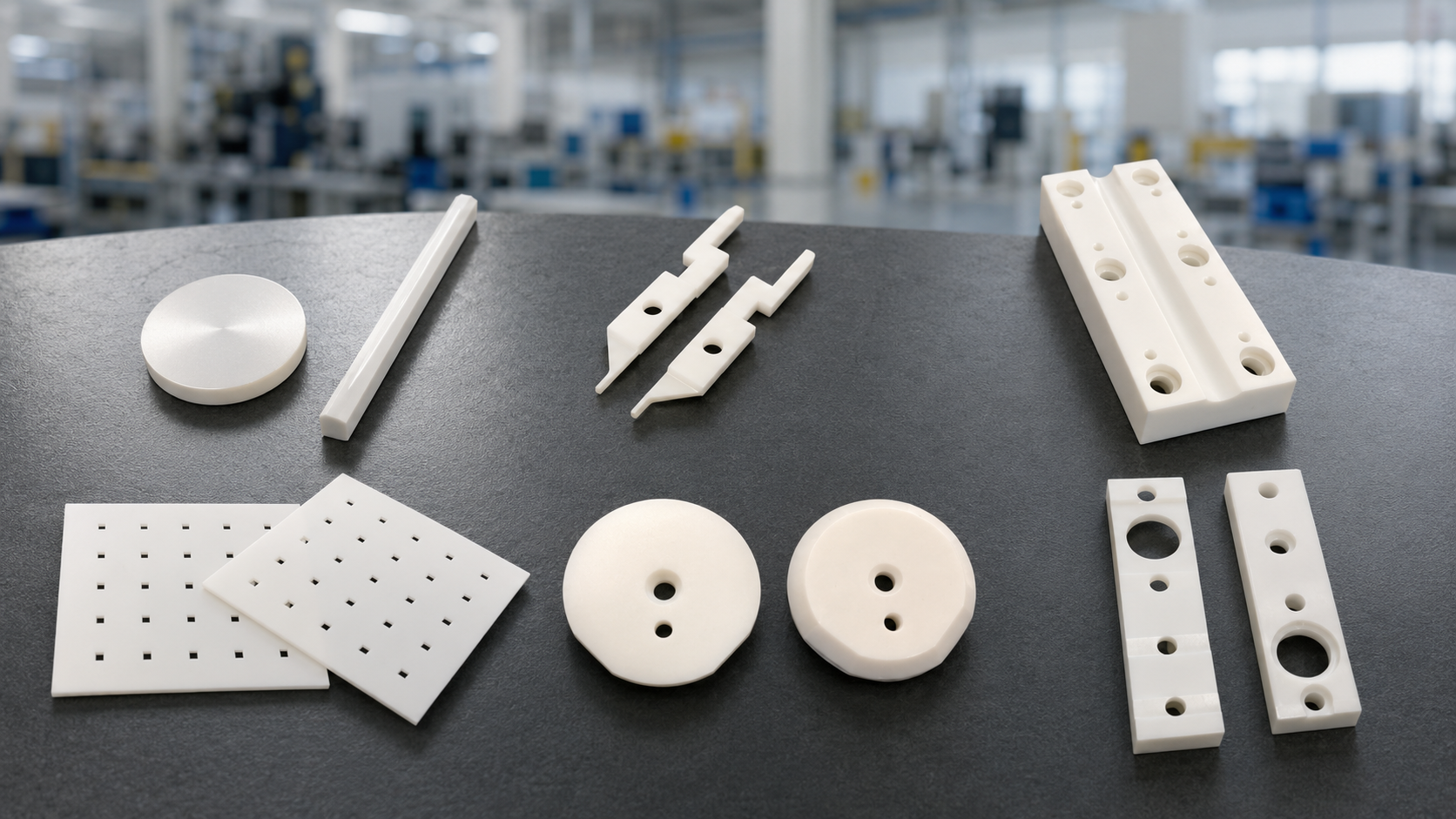
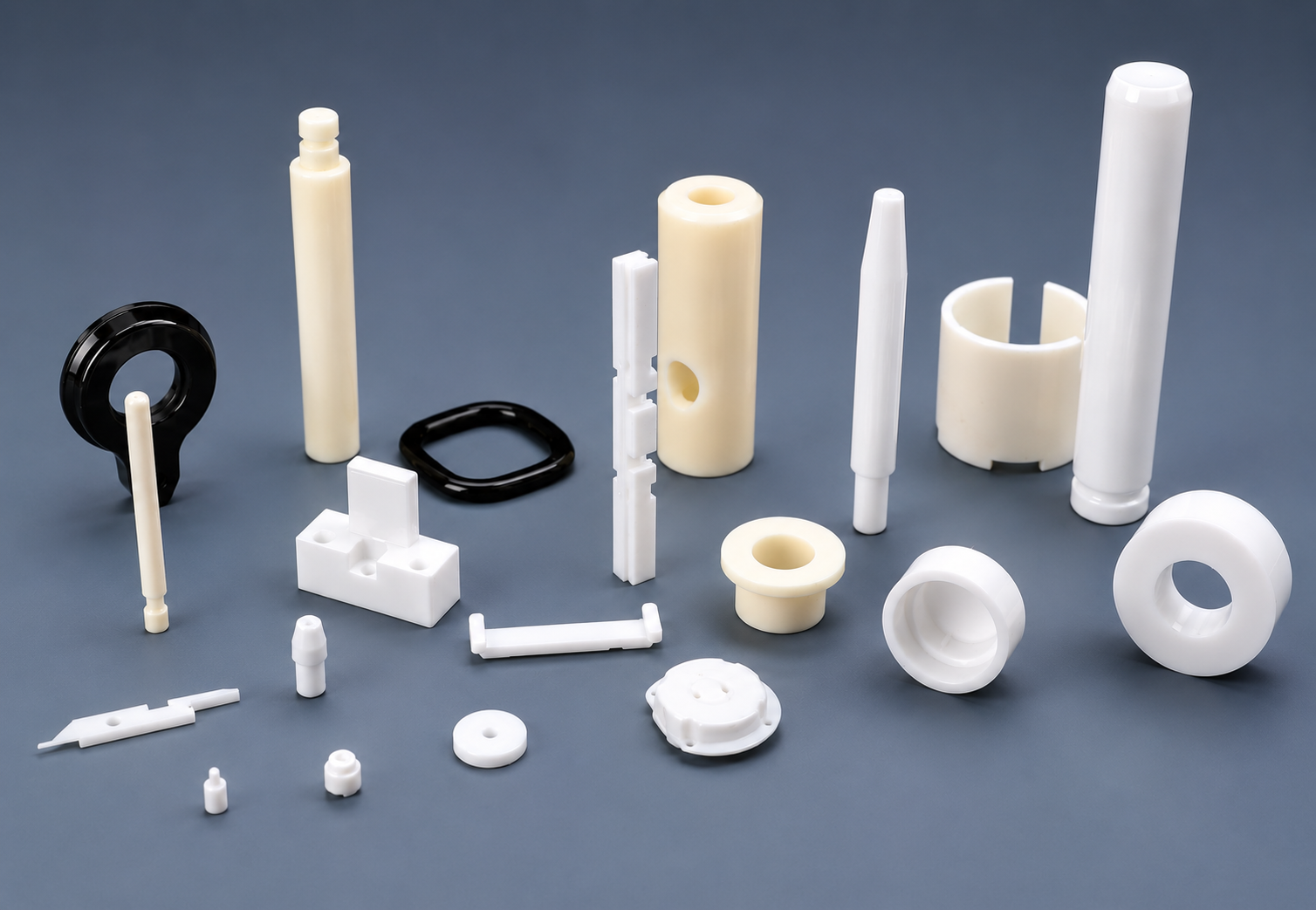
In many cases, metal or plastic parts cannot provide enough wear resistance, insulation, corrosion resistance, thermal stability, or dimensional stability. So, custom ceramic parts are widely used in industrial applications. Ceramics are not chosen only because they are hard. They are also used because they can deliver reliable performance in demanding environments.
However, ordering custom ceramic parts is different from buying standard ceramic components. Ceramic materials can be hard, brittle, and sensitive to part geometry, tolerances, and machining methods.
Small design details, such as sharp corners, thin walls, deep holes, or unclear tolerance requirements, can affect manufacturability, cost, lead time, and final performance.
Before starting a custom ceramic parts project, engineers and sourcing teams should review the material, structure, tolerances, machining method, inspection standard, and application environment. These factors help determine whether the part can be produced consistently and whether it can meet real working conditions.

Why Custom Ceramic Parts Are Used in Industrial Applications
Custom ceramic parts are often chosen when standard materials cannot meet application requirements. Compared with many metals and plastics, technical ceramics offer excellent wear resistance, electrical insulation, corrosion resistance, high-temperature stability, and long-term dimensional stability.
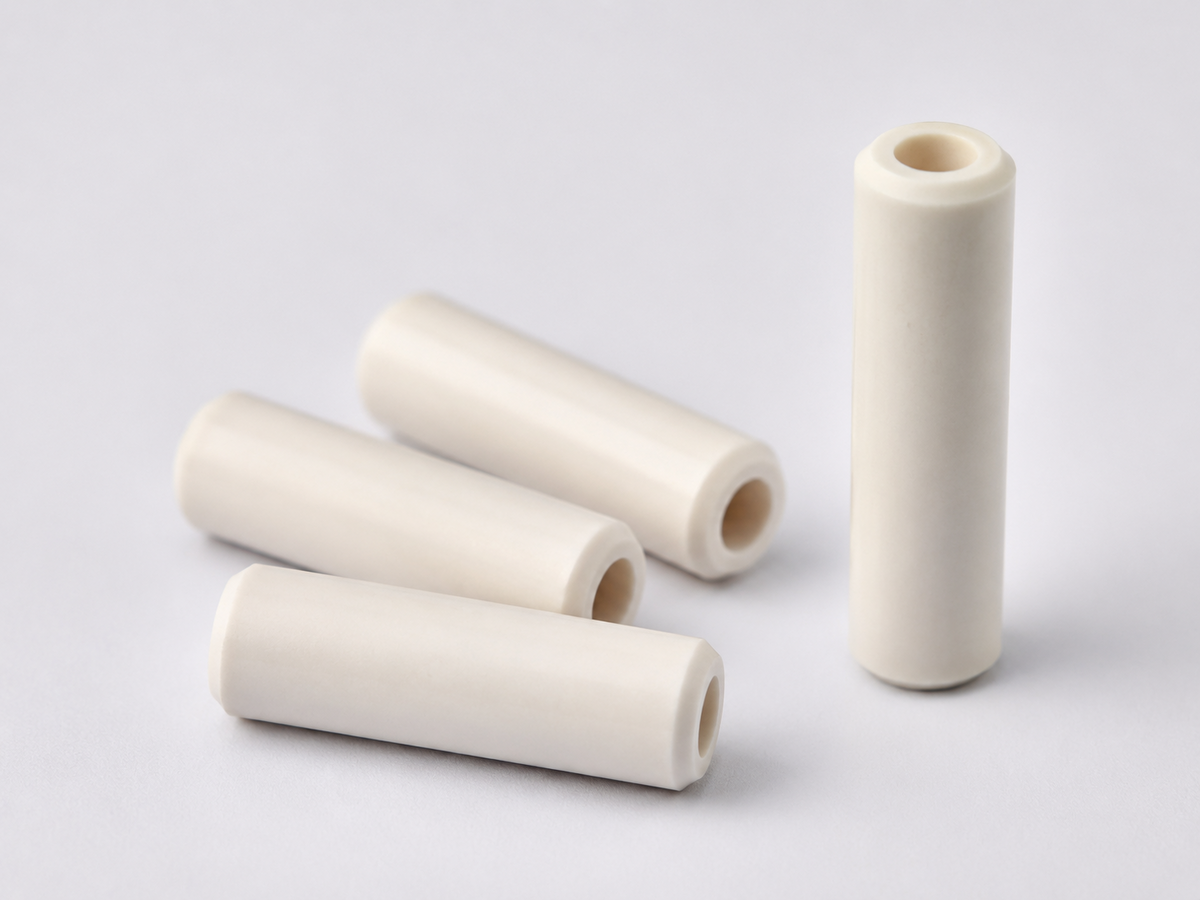
In industrial equipment, ceramic components may be used as wear-resistant guides, insulating sleeves, sealing parts, positioning components, nozzles, bushings, or precision structural parts.
In electronics and electrical equipment, ceramic parts are often selected for insulation. In medical, optical, semiconductor, and automation applications, precision ceramic parts are used when stability, cleanliness, and accurate dimensional control are important.
The value of custom ceramic parts is not only in the material itself. It also depends on matching the right ceramic material, structure, tolerance, and surface requirement to the application.
A ceramic component that performs well in one environment may not be suitable for another if the load, temperature, friction, assembly method, or chemical exposure is different.
This is why custom ceramic components should be reviewed from both a material and manufacturing perspective before production begins.
Material Selection for Custom Ceramic Components
Material selection is one of the first decisions in a custom ceramic parts project. Different ceramic materials have different strengths, and the best choice depends on how the part will be used.
Zirconia ceramic parts are often used when higher toughness, better impact resistance, or a finer surface finish is required.
For applications with higher mechanical stress, thermal shock, or severe wear conditions, materials such as silicon nitride or silicon carbide may also be considered.
The material choice should not be based on one property alone. Hardness is important, but it does not tell the full story. Designers also need to consider brittleness, machinability, surface finish requirements, thermal expansion, chemical resistance, and whether the part will need post-sintering machining.
For buyers, it is more helpful to provide the working environment than to name only a material. If the application involves insulation, friction, high temperature, chemical exposure, or repeated mechanical contact, this information can help the manufacturer recommend a more suitable ceramic material.
Design Challenges in Custom Ceramic Components
The design of custom ceramic components has a direct impact on manufacturability. A part may look simple in a 3D model, but certain features can make ceramic production more difficult.
Thin walls, deep small holes, narrow slots, sharp internal corners, complex curves, and undercut structures may increase the risk of cracking, chipping, deformation, or higher machining cost.
Ceramic materials are less flexible than metals, so features that are easy to machine in aluminum or stainless steel may be more difficult in ceramics.
Mounting and assembly areas also need careful review. If the ceramic part will be pressed, clamped, screwed, bonded, or assembled with metal parts, the design should reduce stress concentration and protect contact surfaces.
Sharp edges or unsupported thin sections may fail during assembly or long-term use.
In many cases, small design adjustments can improve production stability. Adding a reasonable radius, increasing wall thickness, simplifying a slot, or adjusting hole depth may reduce manufacturing risk without changing the main function of the part.
This is why DFM review is important. A reliable custom ceramic parts manufacturer should help evaluate whether the geometry is suitable for forming, sintering, grinding, and precision ceramic machining before production starts.
Tolerance and Machining Considerations
Tolerance control is one of the most important factors when ordering precision ceramic parts. Ceramic components can achieve high accuracy, but not every dimension should be treated as a critical tolerance.
Overly tight tolerances on non-functional areas can increase machining time, inspection difficulty, and overall cost.
For ceramic machining, the process route often depends on the required accuracy and the condition of the part after sintering. Some parts may be formed close to final shape first and then finished by grinding or post-sintering machining.
Critical surfaces, holes, flatness, parallelism, coaxiality, and positioning features may need additional precision processing after the ceramic body is formed.
Hole accuracy is especially important in many ceramic parts. Small holes, deep holes, or holes close to edges may require special attention. If the part needs tight hole position tolerance, roundness, or alignment with another feature, these requirements should be clearly shown on the drawing.
Flatness and coaxiality are also common concerns in custom ceramic components. For sealing surfaces, sliding surfaces, optical alignment areas, or precision assembly features, the drawing should clearly define the critical surfaces and measurement requirements.
A practical tolerance strategy helps both the buyer and the manufacturer. Instead of applying strict tolerances everywhere, it is better to identify which dimensions affect function, assembly, or performance. This allows the supplier to focus machining and inspection resources on the most important areas.
What Information Should Be Provided for a Quotation
A clear RFQ can make the quotation process faster and more accurate. For custom ceramic parts, the manufacturer needs more than a general description or product photo. The more complete the technical information is, the easier it is to evaluate material selection, production feasibility, machining cost, and lead time.
For a custom ceramic parts quotation, buyers should provide:
-
2D drawings and 3D CAD files
-
Required ceramic material or working environment
-
Quantity for prototype, small batch, or mass production
-
Critical dimensions and tolerance requirements
-
Surface finish, chamfer, radius, and edge requirements
-
Application details such as wear, insulation, temperature, corrosion, or load conditions
-
Inspection requirements and dimensional report needs
-
Expected lead time and delivery destination
If the material has not been confirmed, application information becomes especially important. A supplier can help review whether alumina, zirconia, silicon nitride, silicon carbide, or another technical ceramic is more suitable.
If the drawing is still in the design stage, early communication can also reduce later changes. For ceramic components, design changes after tooling, forming, sintering, or precision machining can increase cost and delay the project. Providing complete information at the beginning helps avoid misunderstandings and unnecessary revisions.
Working With a Custom Ceramic Parts Manufacturer
Working with a custom ceramic parts manufacturer is not only about comparing prices.
A suitable manufacturer should be able to review the part geometry, identify potential production risks, and suggest practical improvements when needed. This is especially important for parts with thin walls, small holes, tight tolerances, complex structures, or functional surfaces.
For engineers, early supplier involvement can help confirm whether the design is suitable for ceramic manufacturing. For sourcing teams, it can also help obtain a more accurate quotation and avoid hidden cost increases later in the project.
If your project requires custom ceramic parts, custom ceramic components, or precision ceramic machining based on drawings, it is better to provide both technical files and application details at the RFQ stage. This allows the manufacturer to evaluate material selection, tolerance feasibility, surface requirements, and inspection methods before production begins.
If you are looking for custom ceramic parts for industrial applications, you can visit our custom ceramic parts service page or send your drawings for a manufacturability review.

Share:
Powder Metal Manufacturing: Process, Materials, Benefits, and Custom PM Parts
Custom Ceramic Parts: Material Selection, Design Considerations, and Precision Manufacturing